Blogs
How Zinc Coating Helps Identify Steel Quality: A Buyer’s Guide | Hariom Pipes
Zinc coating is one of the most reliable indicators of steel pipe quality. By forming a protective layer over steel, zinc prevents corrosion, rust, and environmental damage, ensuring long-lasting performance.
For buyers, knowing how zinc coating works helps in selecting the right solution for plumbing, construction, agriculture, and industrial applications. In this blog, we take a closer look at why zinc coating matters and how Hariom’s approach sets a higher benchmark for galvanized steel pipes.
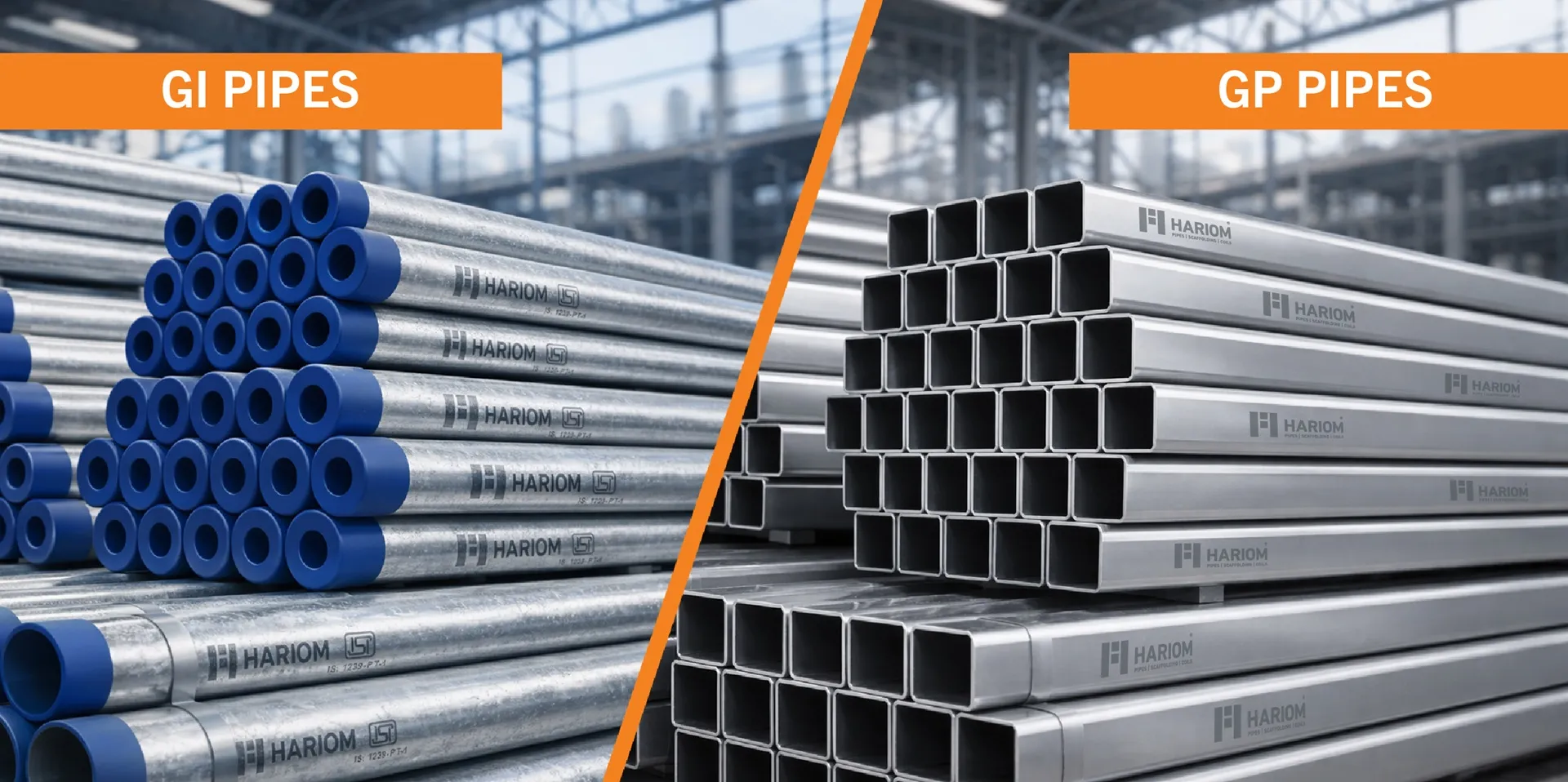
GI and GP zinc coated steel pipes demonstrating strength, finish, and long service life
What Is Zinc Coating on Steel Pipes?
Zinc coating is one of the most critical factors that define the durability, performance, and reliability of steel pipes. As manufacturers of premium GI Pipes and GP Pipes, Hariom uses advanced galvanisation processes to ensure every pipe we produce meets the highest quality standards.
Here’s how zinc Coating Protects Steel:
-
Prevents rust and corrosion.
-
Acts as a sacrificial layer that corrodes before the steel
-
Maintains structural strength over long periods
-
Reduces the need for frequent maintenance
At Hariom Pipes, zinc coating is carefully controlled to ensure uniform coverage and long-term reliability.
Origin of the Zinc Coating Term
The concept of galvanisation dates back to early discoveries in electrochemical protection. Over time, zinc coating became the industry standard for safeguarding steel against corrosion. Today, galvanised steel pipes are widely trusted for both indoor and outdoor applications.
Hariom Pipes continues this proven practice using modern manufacturing technology to deliver consistent, high-performance galvanised pipes.
Why Zinc Coating Is a Key Indicator of Steel Quality?
The strength of steel matters, but its ability to resist corrosion and perform consistently depends on the quality of the zinc coating applied. Not all galvanized pipes offer the same level of protection. At Hariom, we ensure every zinc-coated steel pipe meets strict internal and BIS quality benchmarks.
What we control at Hariom Pipes:
-
Uniform zinc coating thickness
-
Strong bonding between zinc and steel
-
Smooth, controlled surface finish
-
Reliable corrosion resistance
This attention to detail allows our pipes to perform reliably across industries and climates.
What Are GI Pipes?
GI Pipes are manufactured using a hot-dip galvanization process, where steel pipes are immersed in molten zinc. This results in a thick and durable coating that offers superior corrosion resistance.
Key Advantages of Hariom GI Pipes
-
Excellent protection against water and moisture
-
Long service life in harsh environments
-
High strength and durability
Applications of GI Pipes
Hariom GI Pipes are designed to deliver reliability where consistent water exposure is involved.
What Are GP Pipes?
GP Pipes are manufactured from zinc-coated steel sheets that are later formed into pipes. This process provides a smooth finish and uniform appearance.
Key Advantages of Hariom GP Pipes
-
Clean and smooth surface finish
-
Easy fabrication and installation
-
Cost-effective and durable
Applications of GP Pipes
Hariom GP Pipes are ideal for applications where both strength and aesthetics matter.
How to Choose Between GI Pipes and GP Pipes?
Buyers should select pipes based on usage and exposure conditions.
Choose GI Pipes when:
-
Pipes are in constant contact with water
-
High corrosion resistance is required
-
Long service life is critical
Choose GP Pipes when:
-
Structural strength and appearance matter
-
Fabrication and welding are required
-
Cost efficiency is important
Why Buyers Trust Hariom Pipes?
At Hariom Pipes Industries Ltd., quality is built into every stage of manufacturing.
What Sets Us Apart:
-
BIS-certified GI and GP Pipes
-
Integrated manufacturing facilities
-
Strict quality control processes
-
Commitment to sustainable and eco-friendly practices
Our zinc-coated steel pipes are engineered to perform consistently, even in demanding environments. Zinc coating is more than a protective layer; it is a clear indicator of steel quality. By choosing GI Pipes and GP Pipes from Hariom Pipes, buyers invest in durability, reliability, and long-term performance.
Frequently Asked Questions
Zinc coating protects steel from corrosion and rust, extending pipe life and maintaining strength.
Hariom GI Pipes are ideal for plumbing due to their thick zinc coating and water resistance.
Yes, Hariom GP Pipes provide reliable corrosion protection and are widely used in outdoor structures.